
2026 Election: Questionnaire for MV City Council Candidates
Silja Paymer's Response
1. Knowledge and priorities: What do you see as the biggest barriers to making walking and bicycling safe, comfortable, and convenient throughout Mountain View? What specific changes would you prioritize to address them?
I think one of our biggest barriers is that the vision of our Traffic Department and our Transportation Department are not in alignment. As a result, projects go back and forth for years with safety improvements being added due to community input and then removed as a way to cut costs and maintain car speeds. Until we fix this disconnect, we will not see change in our street scapes.
I would like to align both departments with a vision to make our public spaces accessible and safe for all users. This means making our streets safe enough for a kid to use, and improving our design standards to include universal design for users of all abilities to use the facilities. Protected bike lanes are safer for children and also give users of mobility scooters a path without needing to navigate ramps that are not always aligned with the road. Wider sidewalks mean that families can walk together, instead of in a line, and also mean that wheelchair users can use them without getting stuck at “pinch points”, Flat sidewalks that are not interrupted by curb cuts make it easier to push a stroller and also less dangerous for people who use a walker.
I would also like to systematically select places for modal filters that create bike routes at a fraction of the cost of street redesigns.
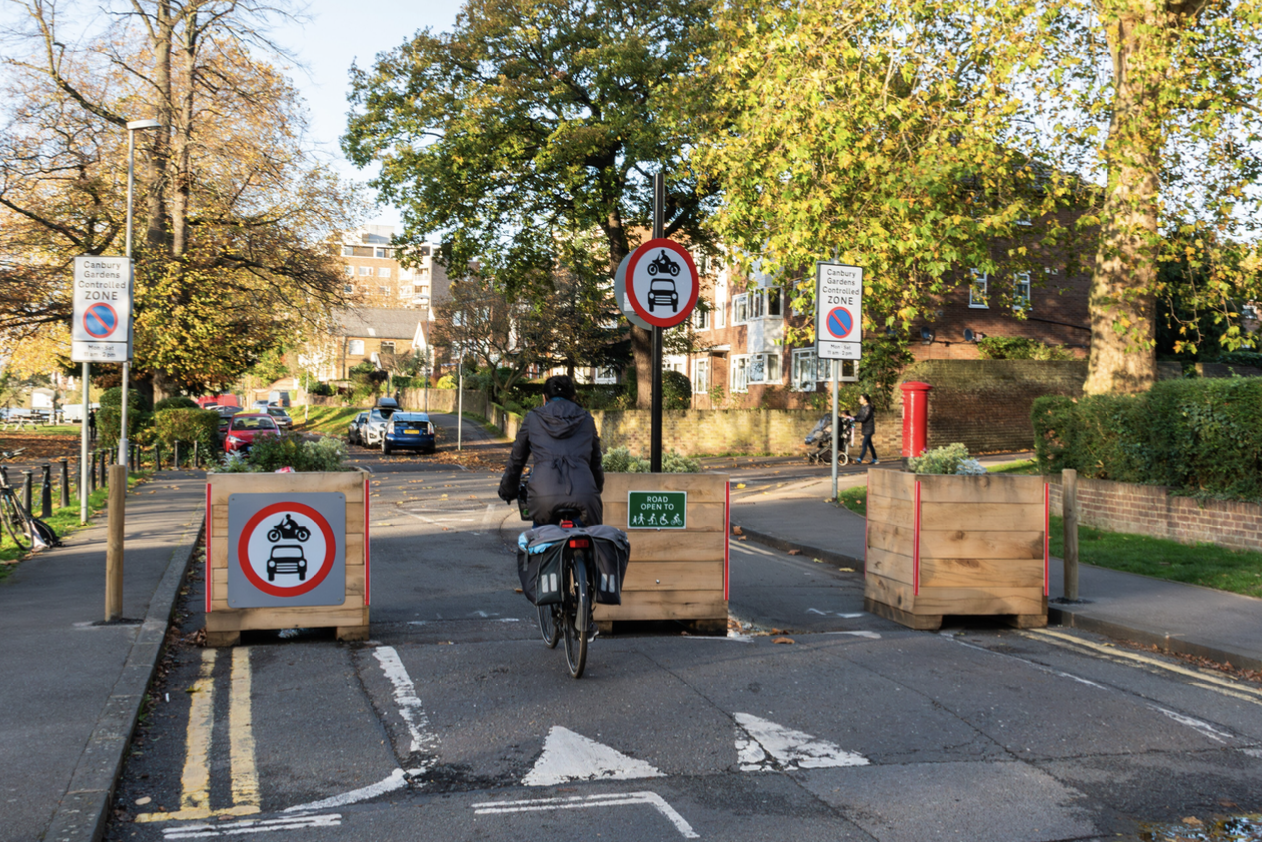
Generally, I would like our design standards to prioritize our walking and biking users of all abilities instead of the desire of drivers to go faster.
2. Judgement: Mountain View has made a number of changes to its streets in recent years, including
the California Street Complete Streets Pilot. Which changes do you consider successful, and which have fallen short? What lessons should the City take from these projects, and what measures should it use to evaluate the success of future street improvements?
I love that Mountain View initiated the El Camino bike lane improvements. I have used them frequently and it has allowed us to bike with our children to businesses on El Camino, like Viva Sol.
I like many of the components of California Street, but the decision to keep it as a Pilot program hampered its full success. If the areas where parking is prohibited were converted to curbed planting areas, we would not have the enforcement problems we have now. I have often seen cars that just run over the plastic bollards, showing they do not effectively protect the bodies of our cyclists and pedestrians - who are often children. We need to build permanent improvements if we are to realize the full potential of the project, and reduce the visual clutter.
The additions of stop signs in the few places they have been added have been a success. For example, Miramonte and Barbara has seen much fewer near miss events, and Mercy and Calderon intersection is much safer for students. I would like to streamline a process for adding stop signs adjacent to parks and schools, as well as along our Safe Routes to School.
3. Vision and city role: What is your vision for the future of downtown Mountain View? What would you like Castro Street and the surrounding downtown to be like in 5 to 10 years, and what changes should the City make in economic development, public space, transportation, land use, or other areas to achieve that vision?
I would like to see the pedestrian mall project completed. This would mean bringing the street level to the sidewalk to make the entire space more accessible for all users. Keeping the crossings of the cross streets level with the pedestrian mall will also create speed tables to reduce the danger from cross traffic.
I think that housing should be incorporated into the downtown area as mixed use zoning creates naturally walkable neighborhoods.
I also think we need to consider allowing bicycles on the 100-300 blocks of Castro Street or make a system of one way streets on Franklin and Hope to make space for bike lanes. The current system expects that children will bike on the narrow side streets where cars reverse out of parking spots and are now at a higher density due to being diverted from Castro. This is not a safe configuration for our most vulnerable road users.
Finally, I believe that View St should be converted to a bike route to the Mountain View Caltrain station, similar to Bryant Street in Palo Alto, by using modal filters and having stop signs for all cross traffic. This will give a route for commuters who want to move quickly to access public transportation.
4. Leadership and handling opposition: Improving bike and pedestrian infrastructure can require reallocating space or changing how streets are used, which can generate opposition from some residents, businesses, or drivers. As a Councilmember, how would you approach that opposition while advocating for the changes you believe are necessary?
I will listen to all opinions in good faith, but also align my decisions with my vision of speaking for the needs of children. Children cannot be drivers or business owners, but as residents, they still deserve to be in our public spaces. The second week after the installation of the bike lanes on El Camino, I watched a group of young teenagers realize that they could leave the sidewalk which was full of people leaving an event. One of them literally yelled out, “Oh my god! I love bike lanes!” as they realized that they were no longer an uncomfortable intruder on the sidewalk or in danger in the lane shared with drivers.
As a city, we need to be making decisions that benefit all residents, not just those wealthy enough to own a car or a business. That isn’t to say their input doesn’t matter. It is just to say that we need to balance all needs when choosing how to utilize our public spaces.